
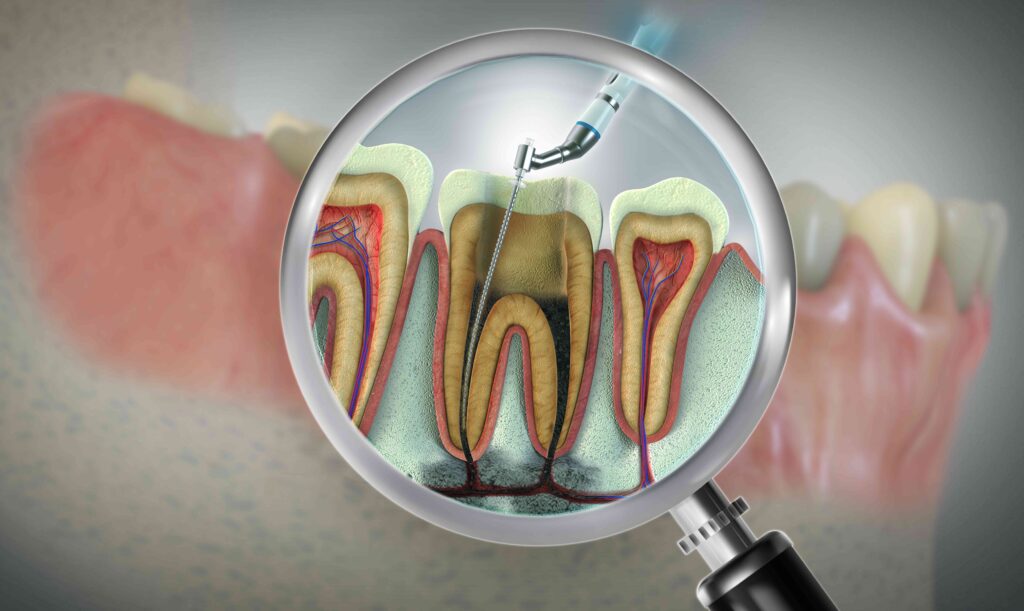
Are you experiencing tooth pain? Endodontists specialize in treating tooth pain and related issues. There are various treatment methods available to address painful conditions afflicting the pulp of the teeth. Two of the most common are root canal treatment and apicoectomies. Continue reading to learn about the difference between the two and when one may be required.
What Is Root Canal Treatment?
The inner layer of the tooth is called the “pulp.” This tissue contains nerves, blood vessels, and passageways that feed nutrients from your body to your tooth. Dental pulp is necessary when the teeth are growing in but is less important when you are an adult. However, when a tooth is chipped, cracked, decayed, or affected by gum disease, an infection can occur. Root canal treatment is a procedure in which your orthodontist makes an opening in the tooth to remove the infected pulp. This can save the tooth, preventing eventual extraction.
What Is an Apicoectomy?
Root canals work by clearing out infected pulp from within the tooth to prevent further infection. However, some infections spread to the roots of the teeth and the gum tissue surrounding them. In this case, you may continue to experience pain, even after successful tooth canal treatment. This is where an apicoectomy can help. This procedure involves making an incision in the gums to access the roots of the tooth. The infected roots are removed. A filling is inserted to cap off your tooth. Then, the gums are stitched up.
When Are Root Canal Treatment & Apicoectomies Needed?
There are various signs that could indicate that you need root canal. Here are some of the most common.
- Persistent tooth pain
- Tooth or gum discoloration
- Swollen, bleeding gums
- Sensitivity to hot and cold foods
- Chipped, cracked, and broken teeth
If you have multiple symptoms listed above, it is a good idea to schedule an appointment with your endodontist. You should also see your dentist every six months for routine checkups. This way, they can identify teeth that may need treatment.
Most of the time, apicoectomies are performed after root canal treatment is the infection isn’t completely cleared.
If you have concerns regarding tooth pain, don’t try to wait it out. Schedule an appointment with your endodontist. This way, you can get some relief with root canal treatment and/or an apicoectomy.
About the Author
Dr. Paul Scott his dental doctorate from Northwestern University Dental School in Chicago, served in the United States Navy, and went on to receive his Certification in Endodontics and Master of Science degree from Northwestern University. Since then, he has performed over 35,000 root canals! He is a proud member of numerous professional organizations, including the American Association of Endodontics. For more information or to schedule an appointment, visit his website or call (321) 722-0550.