
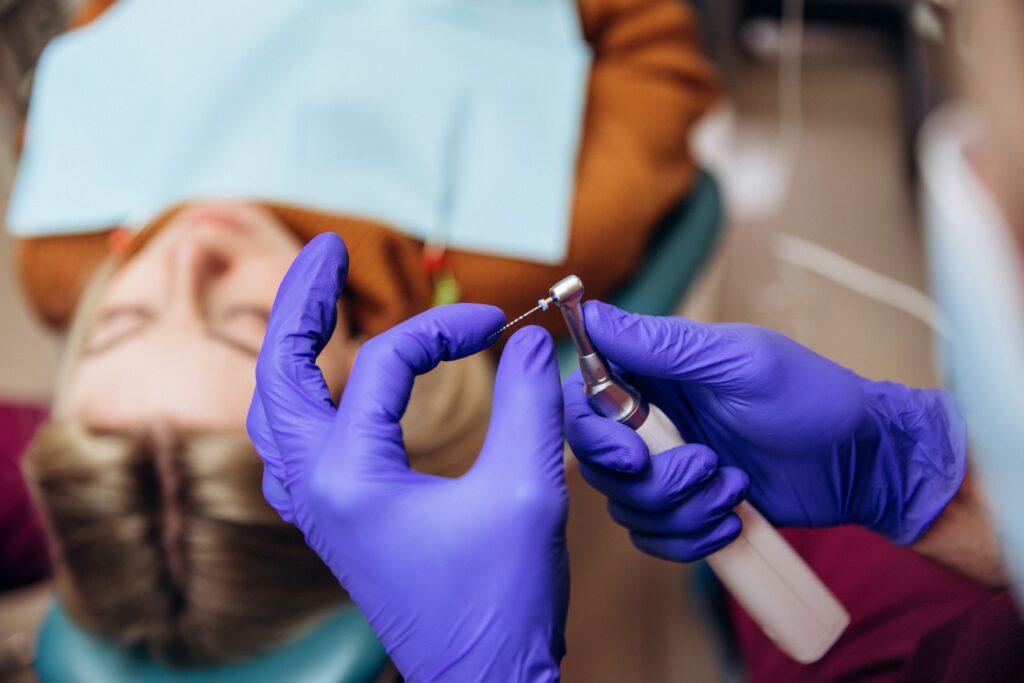
Although root canals once had a reputation for being a somewhat painful procedure, thanks to contemporary dental treatments, technology, and techniques, that’s not usually the case today.
Improvements in medications and methodology over the past several decades have led to more comfortable and accurate treatment results. For example, did you know that scientists have discovered an association between “good” cholesterol and root canal success? Continue reading to learn more about this fascinating connection!
What Happens During Root Canals?
This is the standard treatment for dental infections that cause severe and persistent discomfort, although pain is not necessarily a prerequisite for this service. Today, root canals usually alleviate more aches and issues than they cause, and are the tried-and-true way to treat toothaches and preserve injured teeth.
During your procedure, your endodontist makes a small opening in your enamel to access the decayed or infected materials in the pulp. Then, they clear away damaged material and disinfect the tooth, usually with bleach intended for this purpose, before filling it with a putty-like material called gutta-percha to preserve the structure and prevent recontamination. This is often followed by placing a lifelike dental crown to restore your tooth’s appearance and function.
How is “Good” Cholesterol Used for Root Canals?
In March 2025, the National Institute of Dental and Craniofacial Research published a study about the impact of using HDL, which is a high-density lipoprotein (or “good” cholesterol), during root canal procedures. When this ingredient is produced naturally in the body, it acts as an anti-inflammatory and is associated with heart-related benefits.
But HDL also functions like a sponge, absorbing toxins and helping the body facilitate its own healing. As a result, the lead author of the study, Dr. Marco Bottino, D.D.S., Ph.D., of the University of Michigan, decided to test the impact of lab-made HDL rather than bleach when disinfecting teeth during root canals in rats.
Does “Good” Cholesterol Affect Treatment Success?
The study revealed that the teeth treated with the lab-made HDL had fewer pro-inflammatory immune cells in the root tissue, which helped reduce associated soreness and swelling. However, this ingredient was comparable to standard methods in terms of potential bone loss from the procedure.
This indicates that there may be benefits to using “good” cholesterol during root canal treatment with your endodontist. But additional research is needed before this theory can be tested with larger animal studies or in people.
If you have questions about an upcoming root canal procedure or the materials involved, your endodontist can provide detailed information based on your unique circumstances!
Meet the Author
Dr. Paul Scott has more than 20 years of experience providing specialized services to preserve patients’ smiles. He graduated from Northwestern University Dental School in Chicago, then later earned his Certification in Endodontics and a Master of Science degree from Northwestern University. Today, he has performed over 35,000 root canals using state-of-the-art equipment to improve comfort and deliver accurate results. You can request an appointment on the website or by calling (321) 722-0550.